Udon Thani City (อุดรธานี)
A thriving, visitor-friendly, urban hub
What Kind of a City Is Udon Thani?
Udon Thani, known universally as “Udon”, is a busy working city on the northern edge of Isan. With a population of over 150,000, it is a regional hub and thriving commercial centre. It is not a resort, and it doesn’t have any outstanding headline attractions. But it is a great city to live in or visit.
Why Visit?
Udon includes everything you need as a holiday or touring base: great restaurants, lively night markets, excellent coffee shops, really good hotels, a top-notch shopping mall, and strong transport links.
Visit if you want to explore the local region, or if you’re happy to slow down and experience everyday Thai life.
Finding Your Way Around
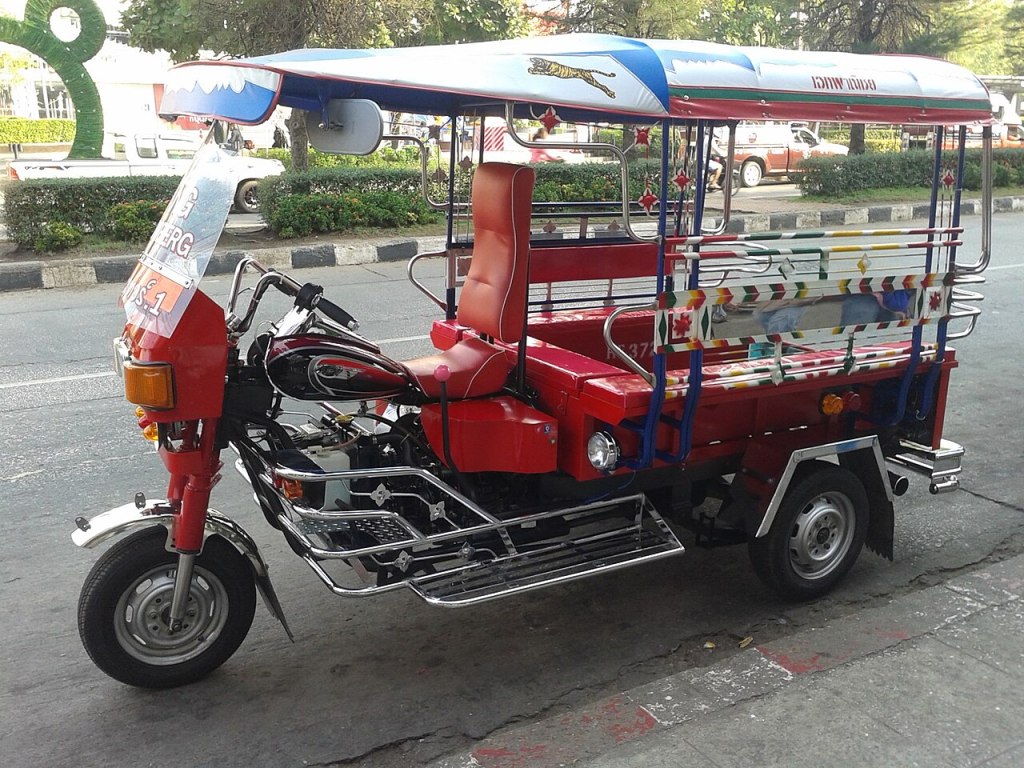
Udon’s city centre can be confusing at first, so you will probably depend on a good navigation app, or on your Grab or tuk-tuk driver. One guide suggests that it’s easy to orient yourself using the three large roundabouts in the city centre, but in practice they all look remarkably similar.
The city is surrounded by a major ring road around 2–5 km from the centre. The railway divides the city, running from south to north, with relatively few crossing points. The airport sits inside the ring road to the south.
Within the ring road, Posri Road crosses the city from southeast to northwest, and most points of interest lie to the north of Posri Road, between the railway station and Nong Prajak Park.
Around the city centre are areas of dense commerce and housing, along with hospitals, schools, universities, and government offices. There are also some pleasant suburbs within and beyond the ring road, particularly around Phonpisai Lake.
As you’d expect, the weather in Udon is always hot. During the day you might find yourself gravitating towards the cool air-conditioning of Central Udon shopping mall — a really good place to browse and eat, or simply to watch the Thai middle classes in their natural habitat. In the evening it’s usually cool enough to visit a night market or spend time around Nong Prajak Lake.
Hotels, Food, and Drink
There are so many good hotels and restaurants in Udon that it would be pointless to list them here. Tripadvisor and Booking.com are useful for finding places to eat or stay.
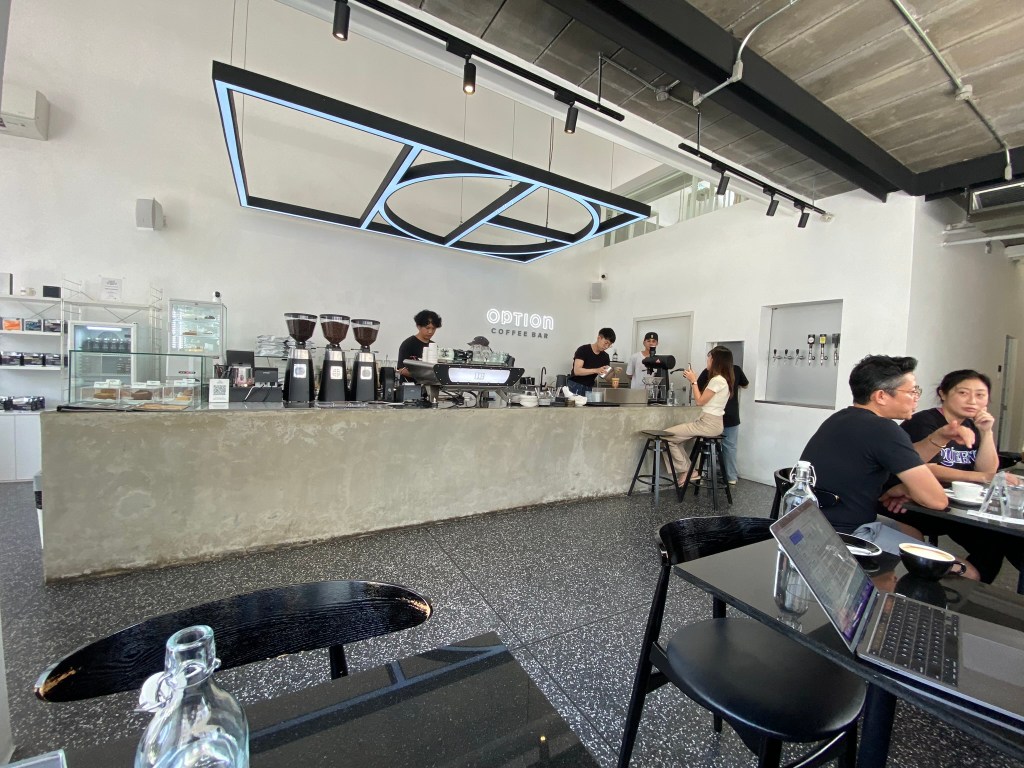
It’s really worth seeking out the city’s many independent coffee shops. Often beautifully designed, and offering a wide range of Asian-style drinks and cakes alongside excellent coffee, they have popped up all over town.
Key Places in the City
Visitors and locals alike often gravitate to Central Udon mall, a great place to eat, shop, and relax — and, most importantly, fully air-conditioned. It’s also a useful transport hub for taxis and tuk-tuks. The complex includes a good-value, higher-end hotel.
UD Town, next to the railway station, is a well-designed modern outdoor mall with a strong focus on food. There are landscaped outlets at the southern end, and a busy night market to the north.
The standout photogenic attraction in the city is Nong Prajak→ Lake and Park. At dusk, hundreds of people jog or cycle around the lake. Don’t miss the giant plastic ducks, which have somehow become a symbol of Udon.
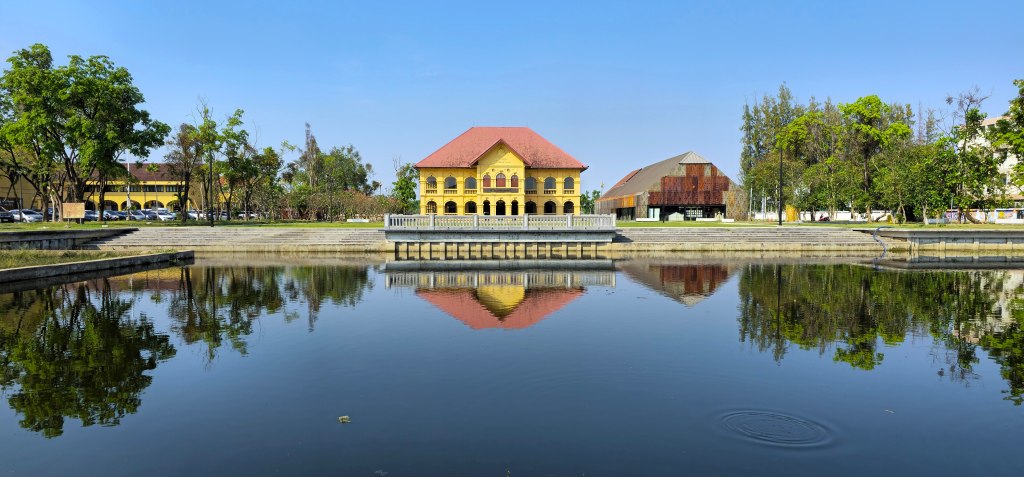
Udon has two good museums: the Udon Thani City Museum→ and the Thai Chinese Cultural Centre→. The City Museum is housed in a beautifully restored former governor’s mansion in a park beside Nong Prajak. The Chinese Cultural Centre includes a temple, Chinese gardens, and a fascinating modern museum.
The various night markets in Udon are justifiably famous. They’re great places to wander, sample local dishes, or fill up on comfort food.
More to come.
A Bit of History
Udon Thani has existed only since 1893, when French colonial expansion along the Mekong forced the Thai government to move military and administrative centres at least 25 km from the river. At the same time, France took control of the left bank of the Mekong — now Laos. Udon, around 50 km inland, was chosen largely to replace Nong Khai as the region’s administrative centre.
The city remained a relatively minor provincial capital until the 1960s, when it became the site of a major American airbase during the Vietnam War. Udon was a hub for the CIA-linked airline Air America and for a wide range of US Air Force units. The USAF withdrew in 1975, but this period transformed the local economy and left enduring links between Udon and the United States. The airfield is now Udon Thani International Airport, alongside a large Royal Thai Air Force base and, reportedly, a continuing intelligence presence.
Udon Thani’s tourist-oriented nightlife is limited and largely reflects this history. While there are bars and late-night venues, they form only a small part of the city’s character, which is defined far more by markets, food culture, parks, and everyday local life. Generally, you have to actively seek out nightlife rather than stumble across it.
 Udon Thani Uncovered